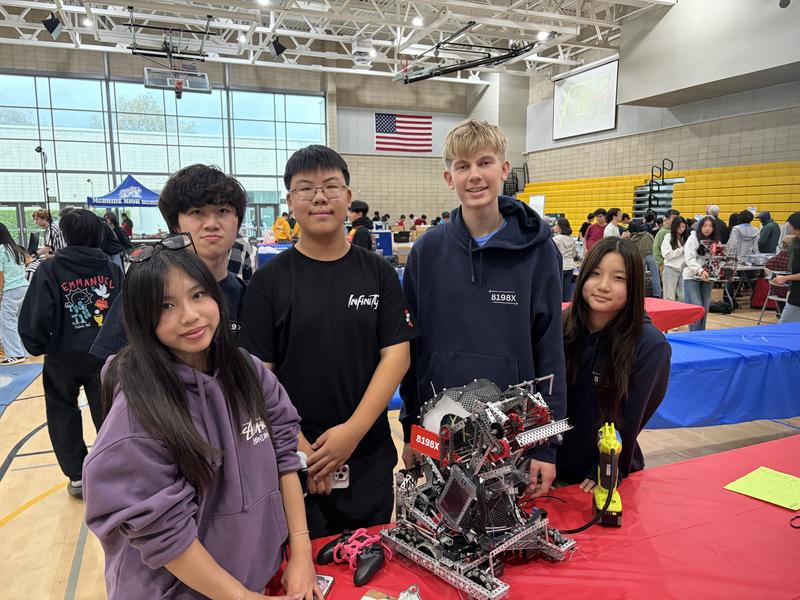
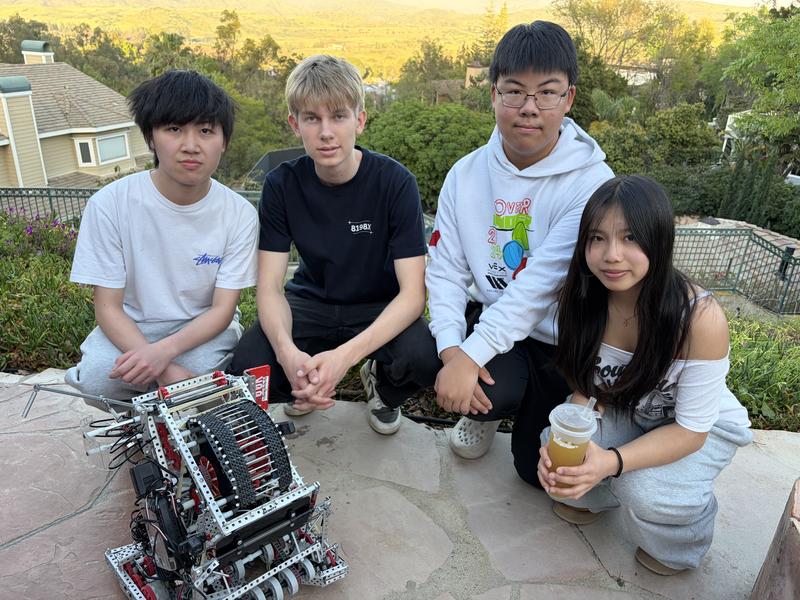
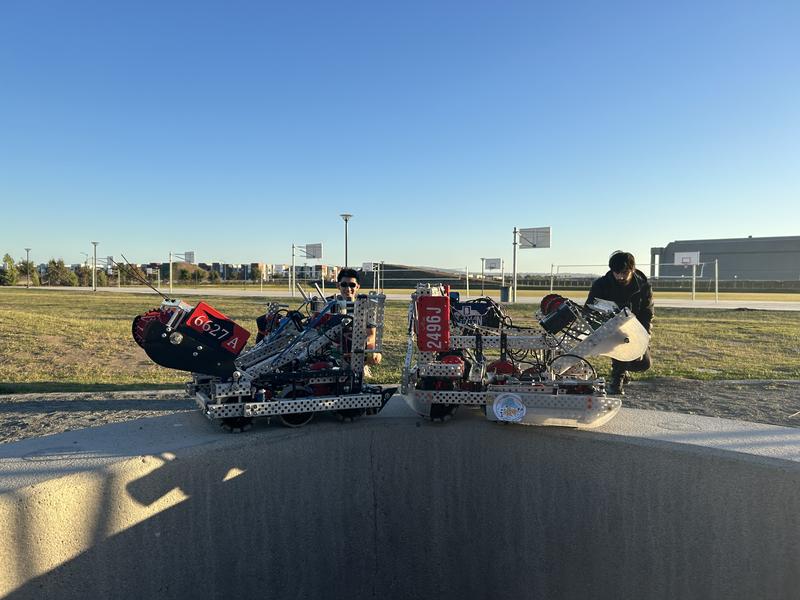
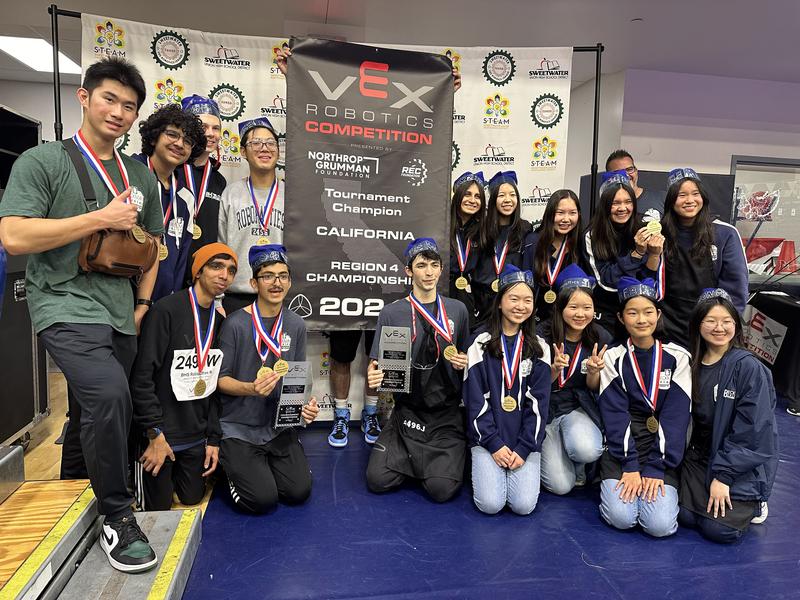
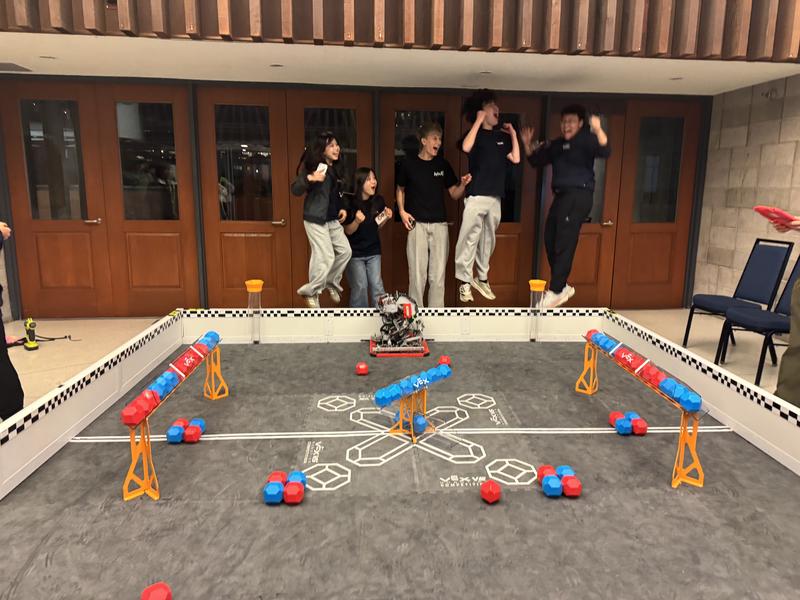
State Champions.
Building, programming, and CAD design.
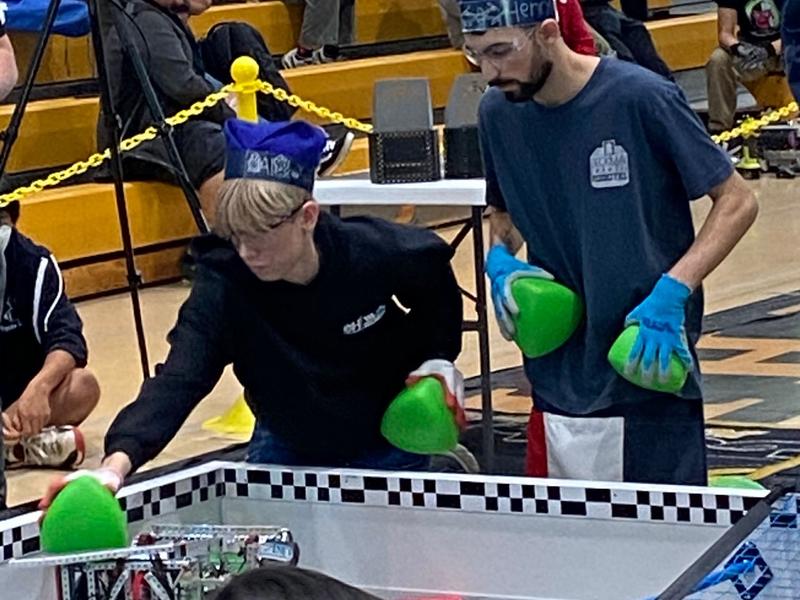
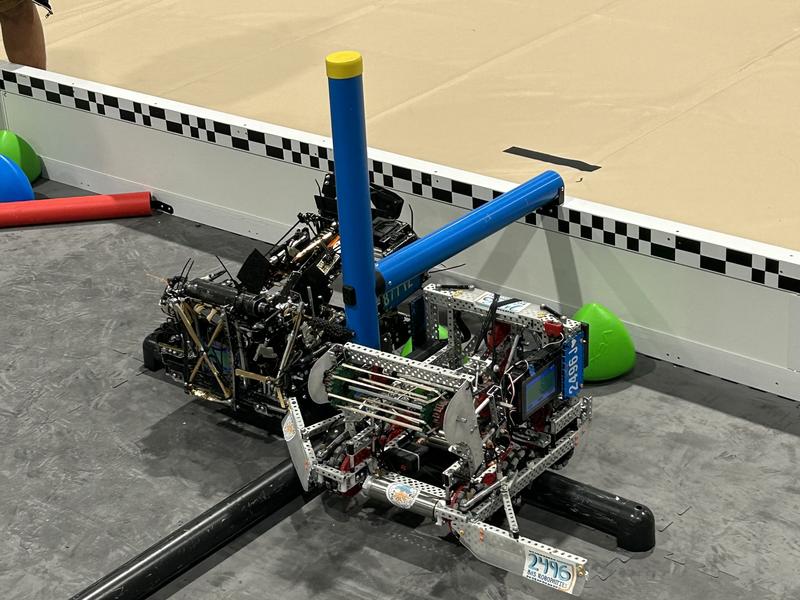
I've done VEX Robotics for four years: from struggling to understand PID and having no design experience to coding autonomous programs that won the California State Championship and building robots that competed at the World Championship.
CAD Models
I learned how to use CAD in the 22-23 season, and I haven't stopped designing robots with CAD since. I primarily use OnShape, although I have experience with Fusion 360 and Inventor as well.
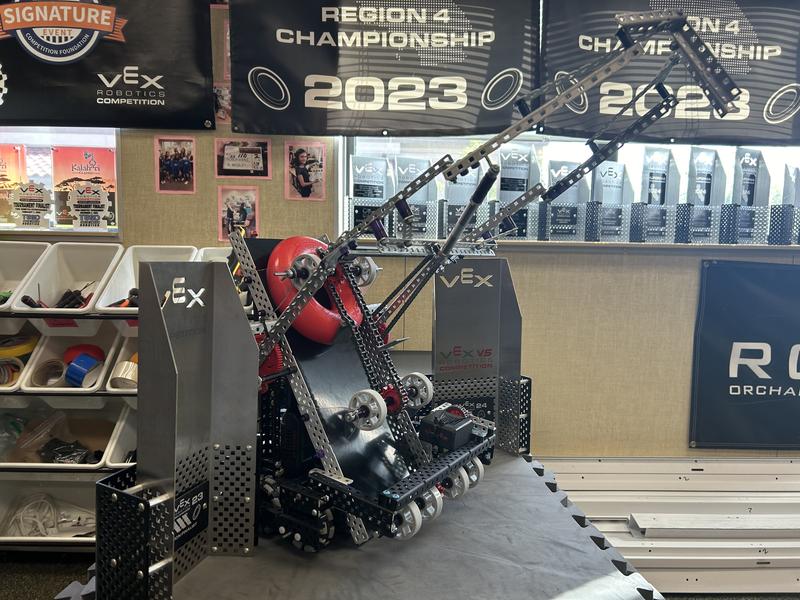
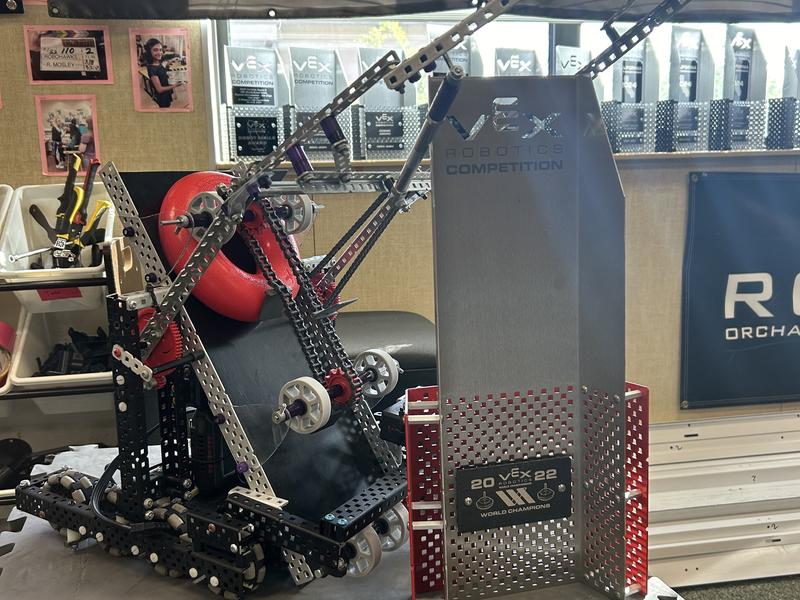
Spin Up (2022–23) v1
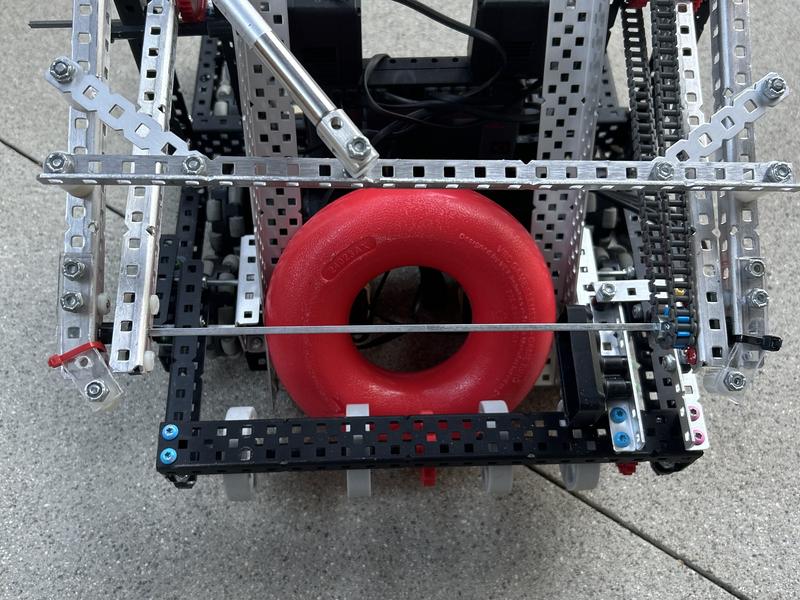
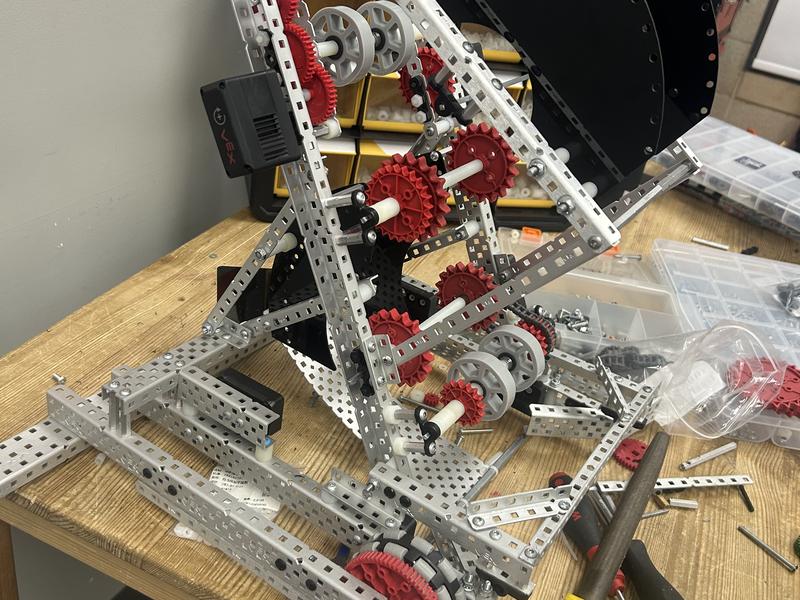
My first V5RC robot design, which included some innovative (but not entirely practical) features:
- U-Shaped flywheel design with an adjustable hood to change shot angle
- Tether wall mechanism to block off opponents in the corners during the expansion period
- 257 RPM drivebase with 4" wheels
- Three tracking wheels with rotation sensors for implementing odometry
C++ Control Systems
I independently learned and implemented key control theory algorithms over four years, starting with a malfunctioning time-based autonomous program. I stepped into the world of control theory in pursuit of perfecting robotic movement: days tuning PID controllers turned into weeks crafting odometry and MCL.
// Odometry: track robot position from wheel encoders
void updateOdometry() {
  double dL = leftTracker.get_value();
  double dR = rightTracker.get_value();
  double dB = backTracker.get_value();

  double dTheta = (dL - dR) / TRACK_WIDTH;

  if (fabs(dTheta) < 1e-6) {
    // Straight-line motion
    globalX += dB * cos(heading);
    globalY += dB * sin(heading);
  } else {
    // Arc motion — integrate curvature
    double r = dB / dTheta;
    globalX += r * (sin(heading + dTheta)
                  - sin(heading));
    globalY -= r * (cos(heading + dTheta)
                  - cos(heading));
    heading += dTheta;
  }
}// Resample particles weighted by sensor likelihood
void resampleParticles(
vector<Particle>& particles,
double sensorReading
) {
// Weight each particle by Gaussian likelihood
for (auto& p : particles) {
double expected = predictedSensor(p.x, p.y);
p.weight = gaussianLikelihood(
sensorReading, expected, SIGMA
);
}
normalizeWeights(particles);
// Low-variance resampling
particles = lowVarianceSampler(particles);
}
// Gaussian likelihood function
double gaussianLikelihood(
double z, double mu, double sigma
) {
double diff = z - mu;
return exp(-(diff*diff) / (2*sigma*sigma));
}Awards & Honors
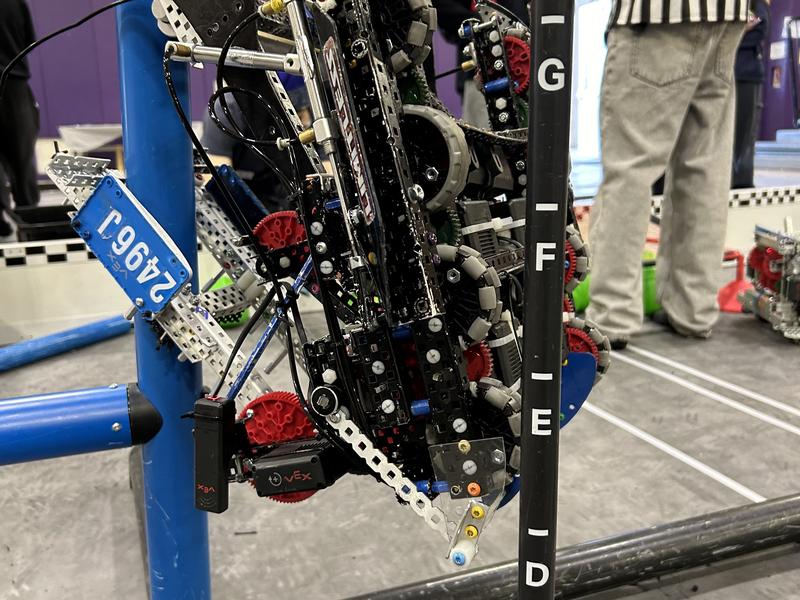
Competition Photos